CSIA Certified Technicians
Highest standard of training.

Home > Services > Waterproofing
Waterproofing
Brickliners provides chimney waterproofing for homeowners in Burlington, Essex Junction, Jericho, Colchester, and surrounding communities. Brick and mortar are naturally porous, absorbing rain and snowmelt that slowly break down the masonry from within. Our CSIA-certified technicians apply a vapor-permeable water repellent that keeps moisture out while allowing trapped vapor to escape, protecting your chimney's structure and appearance for years to come.
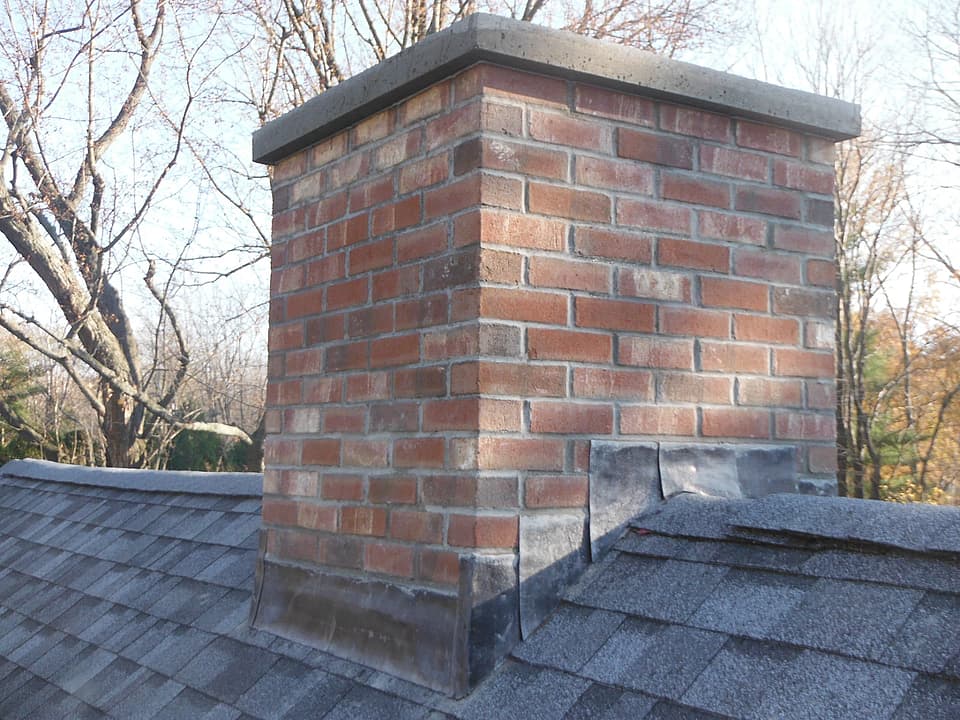
Water penetration causes severe masonry breakdown through freeze thaw expansion, eroding mortar joints, rusting internal steel components, and weakening underlying chimney structures.
Masonry Protection
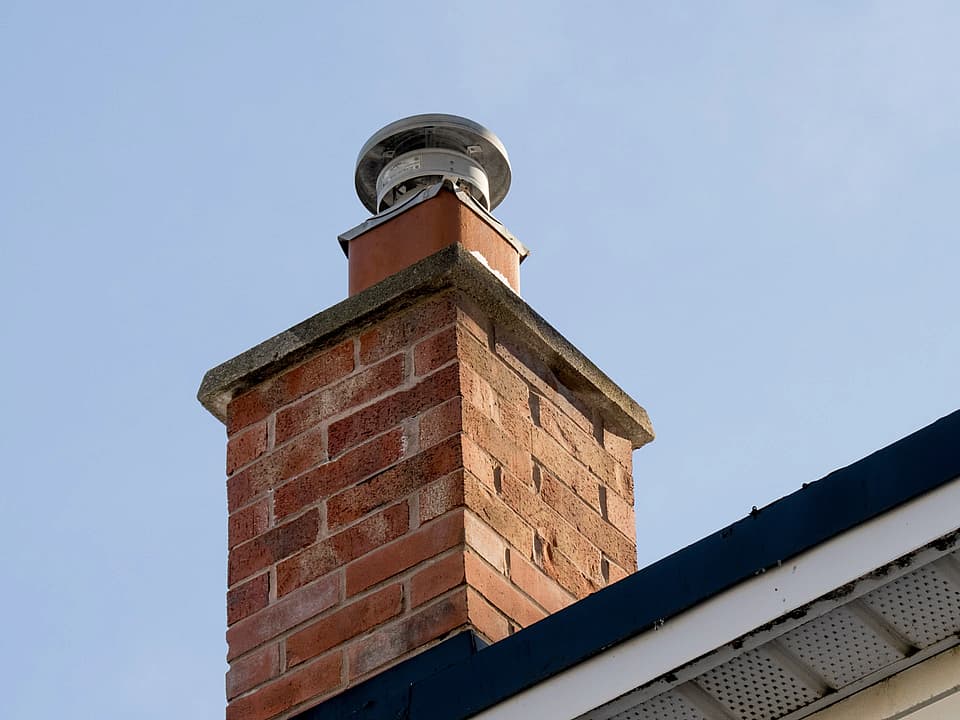
Chimney waterproofing is a professional treatment that protects brick and mortar from absorbing water. Masonry is naturally porous, so rain, snowmelt, and humidity soak in over time. In northern Vermont, that trapped moisture freezes and expands, causing cracked brick, crumbling mortar, and eventual leaks. Effective chimney waterproofing uses a vapor-permeable water repellent that blocks liquid water from entering while letting moisture already inside the masonry escape as vapor. That breathability is what separates it from paint or generic sealants, which can trap water and speed up damage.
The treatment causes water to bead and run off the surface instead of soaking into brick and mortar.
Vapor-permeable formulas allow trapped moisture to escape, so water doesn't build up inside the chimney.
Less absorbed water means less ice forming in the masonry, which helps prevent spalling and cracking.
Keeping joints dry slows erosion and extends the time between tuckpointing repairs.
Limiting water movement through the brick reduces the chalky white staining left behind by mineral deposits.
Dry masonry keeps moisture from reaching the flue liner, framing, ceilings, and walls.
The treatment is clear and won't change the color or texture of your brick.
Chimney waterproofing protects the masonry itself, while the cap, crown, and flashing guard the top and roofline.
Damaged mortar or brick should be repaired before treatment so the repellent can perform as intended.
Leak Indicators
Most masonry chimneys benefit from waterproofing, especially in northern Vermont, where rain, snow, and repeated freeze-thaw cycles put constant pressure on brick and mortar. Because masonry is porous, it absorbs moisture that can freeze, expand, and break down the structure from the inside. Chimney waterproofing slows that process. The treatment works best on masonry that's still in good condition, so any damaged brick or mortar needs repair first. When waterproofing is the right fit, we apply a vapor-permeable water repellent that keeps water out while letting the brick breathe.
Chalky white residue on the brick shows that water is moving through the masonry and leaving mineral deposits behind.
Flaking, chipped, or popped-off brick faces mean absorbed water has frozen and forced the surface apart.
Sandy, recessed, or eroding joints let more water into the chimney and need repair before waterproofing.
Masonry that looks saturated long after a storm is absorbing more moisture than it should.
Green growth on the chimney signals that the brick is holding moisture instead of drying out.
A damp smell near the fireplace or stains on nearby walls can mean water is soaking through the masonry and reaching your home.
How it works
 01
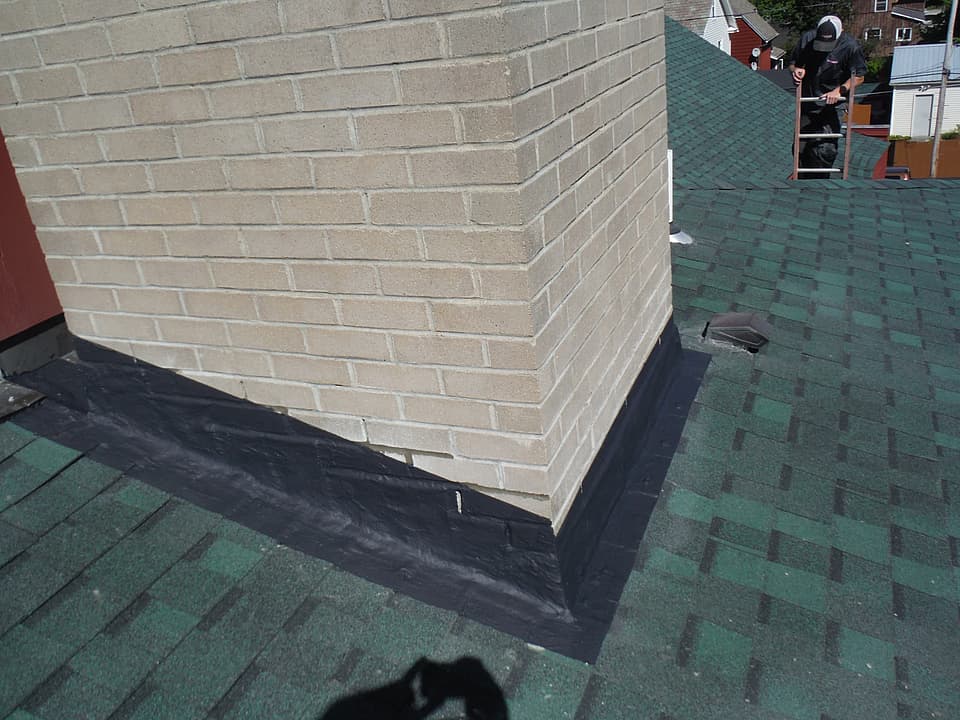
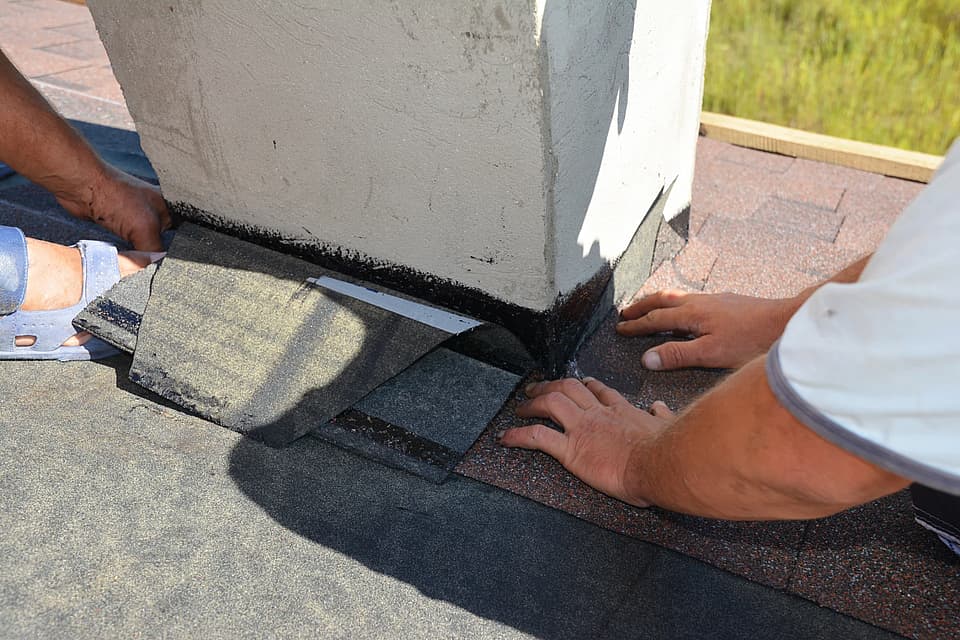
We inspect crowns, caps, flashing, chase covers, and exterior brickwork up close to pinpoint true entry points across primary moisture pathways.
 02
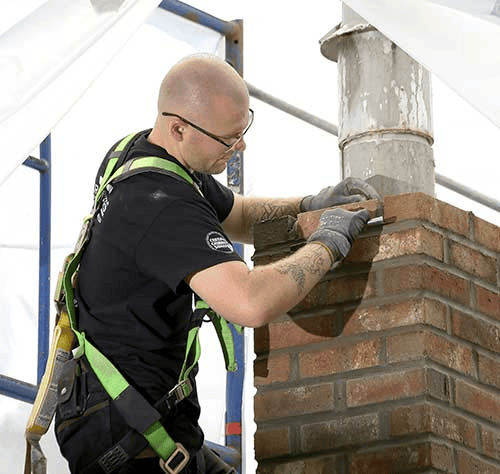
Technicians scrape loose material, repair degraded mortar, and seal open cracks to create a stable foundation for waterproofing sealers and lasting repairs.
 03
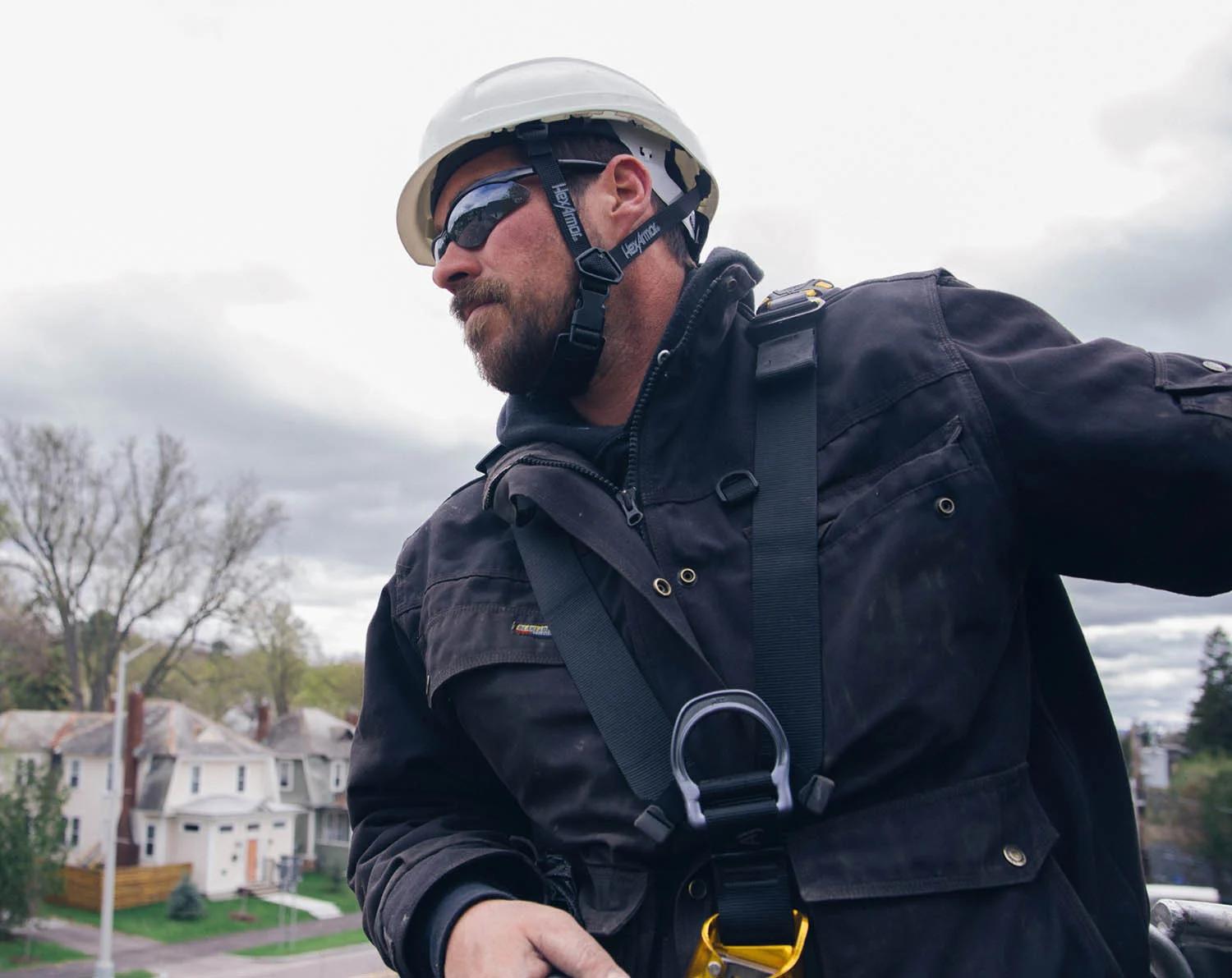
Technicians apply breathable waterproofing sealers to suitable masonry surfaces, providing photo documentation alongside clear summaries detailing all recommended next steps.
Not ready for an in-person visit? Ask about our Virtual Chimney Assessment which allows you to us send photos for a general read on condition and price range. It's a starting point, not a replacement for on-site work.
Call or request an appointment online. We'll find a time that works.
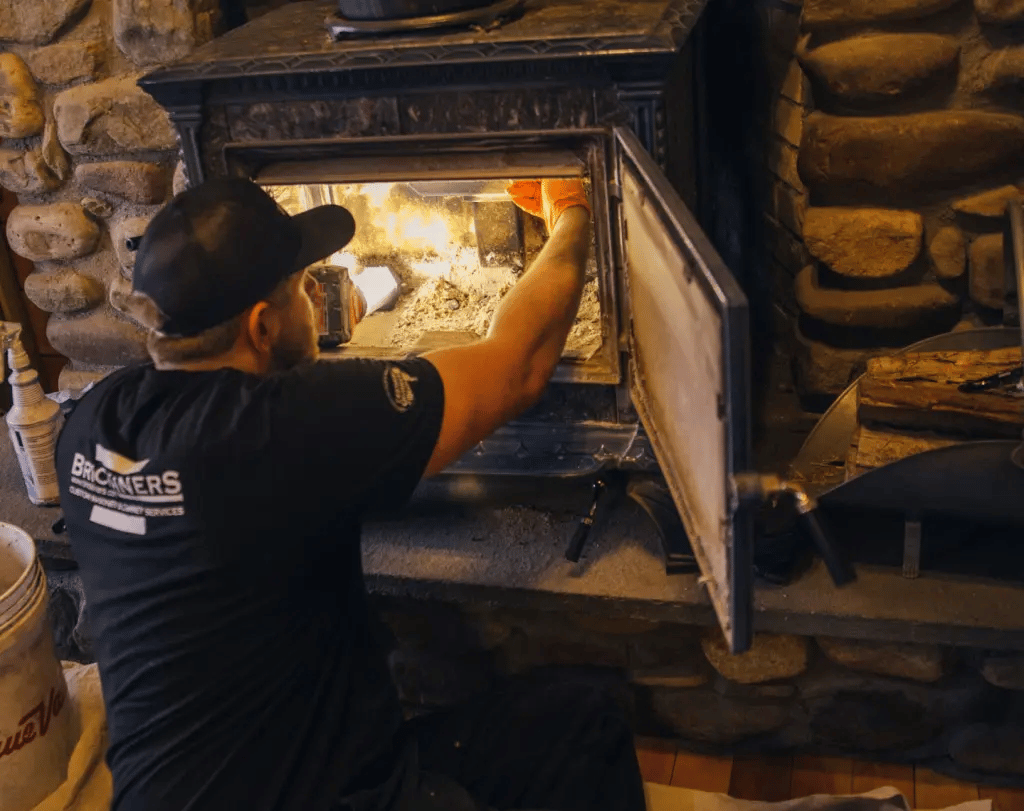
A CSIA-certified technician checks moisture paths, masonry, and related chimney parts.
Review honest inspection findings covering sealers, crowns, flashing, and repairs without pressure.
Good to know
Chimney waterproofing changes how water interacts with your masonry instead of coating it like paint. Brickliners' CSIA-certified technicians apply a vapor-permeable water repellent that soaks into the pores of brick and mortar. There, it bonds with the masonry and lines the tiny openings that would normally absorb moisture.
Before treatment, we clean the chimney and repair damaged mortar or brick so the repellent penetrates evenly. Waterproofing is one layer of a complete water-defense system that also includes your cap, crown, and flashing.
Waterproofing prevents water from soaking into masonry, but it isn't designed to fix a leak that's already happening. Active leaks usually trace back to a specific failure point, such as worn flashing, a cracked crown, a missing cap, or deteriorated mortar joints, and a water repellent can't seal those openings. Applying it over damaged masonry can also leave the underlying problem untouched while water keeps getting in behind the surface.
That's why Brickliners' CSIA-certified technicians start by finding the source. Once we've traced the leak, we make the necessary repairs, whether that means resealing flashing, repairing the crown, replacing the cap, or tuckpointing failing joints. Waterproofing then serves as the finishing layer, protecting the restored brick and mortar from absorbing moisture going forward. The repairs stop the current leak, and the waterproofing helps keep new ones from developing.
The best chimney waterproofing product is made specifically for masonry and lets the brick breathe. Brickliners uses a vapor-permeable water repellent because a chimney needs to release moisture as well as block it.
What to look for:
What to avoid:
Products that seal moisture in can make freeze-thaw damage worse, leading to spalling and crumbling mortar. Application matters as much as the product. Our CSIA-certified technicians clean and repair the chimney first, then apply the repellent evenly so it performs as intended.
Quality chimney waterproofing is designed to be invisible once it dries. The vapor-permeable repellent Brickliners uses penetrates the brick and mortar instead of forming a film on top, so it leaves no shine, coating, or color change behind. Your chimney should keep the same color and texture it had before treatment.
Other products are a different story. Paints, acrylic sealers, and film-forming coatings can darken brick, leave a glossy or plastic-like sheen, or yellow over time. They also tend to trap moisture, which leads to peeling and spalling later.
If you notice a difference after treatment, it's usually from our prep work. We clean the masonry before application to remove dirt, soot, and efflorescence, so the brick may look slightly brighter. If you'd like to change your chimney's color, a breathable masonry stain or limewash is the better route, and we're happy to talk through options.
The lifespan of chimney waterproofing depends on the product, the condition of the masonry, and the weather your chimney faces. A quality vapor-permeable repellent applied by professionals outlasts hardware-store sealants, but no treatment is permanent.
Northern Vermont's freeze-thaw cycles test every treatment, so ongoing care matters. Our CSIA-certified technicians check your waterproofing during annual inspections and let you know when it's time to reapply.
The right interval for chimney waterproofing varies from home to home, so Brickliners bases recommendations on your chimney's condition rather than a fixed calendar. During every annual inspection, our CSIA-certified technicians check how well the masonry is shedding water, which tells us whether the existing treatment is still working.
Signs it may be time to reapply:
Situations that call for reapplication:
Annual inspections let us reapply waterproofing before water starts working into the brick, not after damage appears.
Why Us
We deliver peace of mind with every visit.
Highest standard of training.
Trusted across three states.
No surprises, no upselling.
Seeing what you can't.
Treating your home like ours.
20+
Years serving the Northeast
3
States: VT, NH & ME
CSIA
Certified technicians
2006
Family-owned since
Testimonials
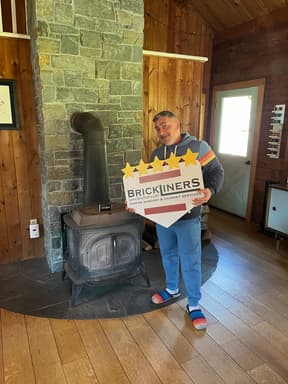
"Tyler at Brickliners is amazing! He arrived promptly and inspected our chimney inside and out and cleaned as well. I had the inspection report the same day! I highly recommend Brickliners!"
Jennifer A., Google
"Knowledgeable and professional,"
Stephen F., Google
"They came in and were very respectful and clear about what they were doing, describing and showing me things that should be adjusted to make it safer,"
David P., Google
Accreditation

Coverage
We provide expert chimney waterproofing and masonry services across Vermont, Maine, and New Hampshire - serving Burlington, South Burlington, Shelburne, Colchester, Jericho, Charlotte, Essex Junction, Fairfax, Hinesburg, Underhill, and more.
Grand Isle County
Chittenden County
Lamoille County
Caledonia County
Addison County
Burlington, VT: (802) 872-0123
Cumberland County
Sagadahoc County
Androscoggin County
Lincoln County
Knox County
York County
Portland, ME: (207) 572-1071
Coös County
Grafton County
Carroll County
Sullivan County
Merrimack County
Belknap County
Littleton, NH: (833) 439-3288
Insights
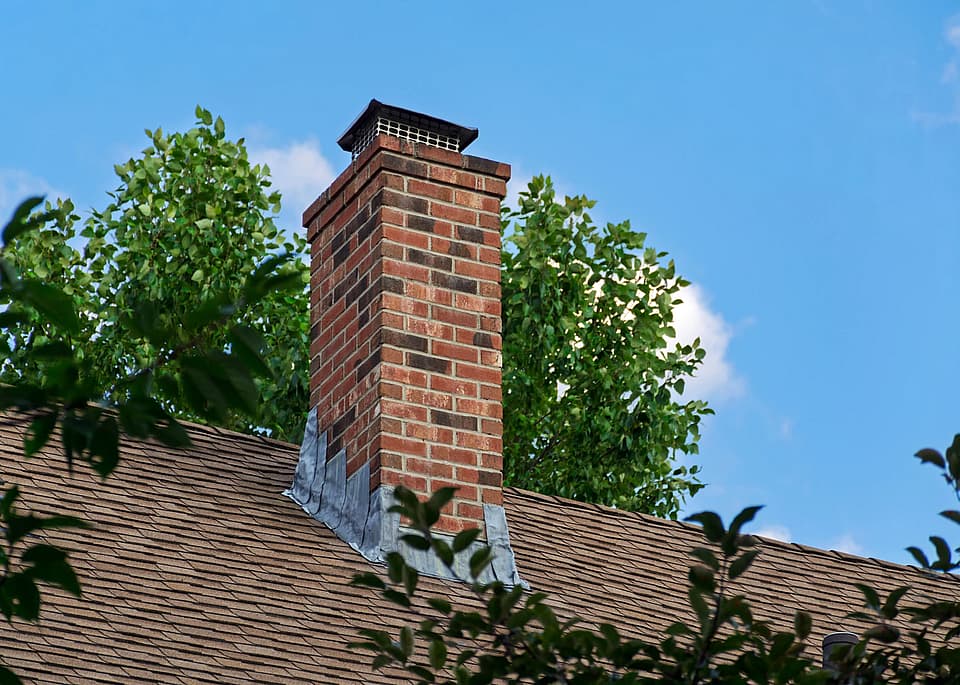
Learn why chimney flashing is essential to prevent leaks and structural damage.
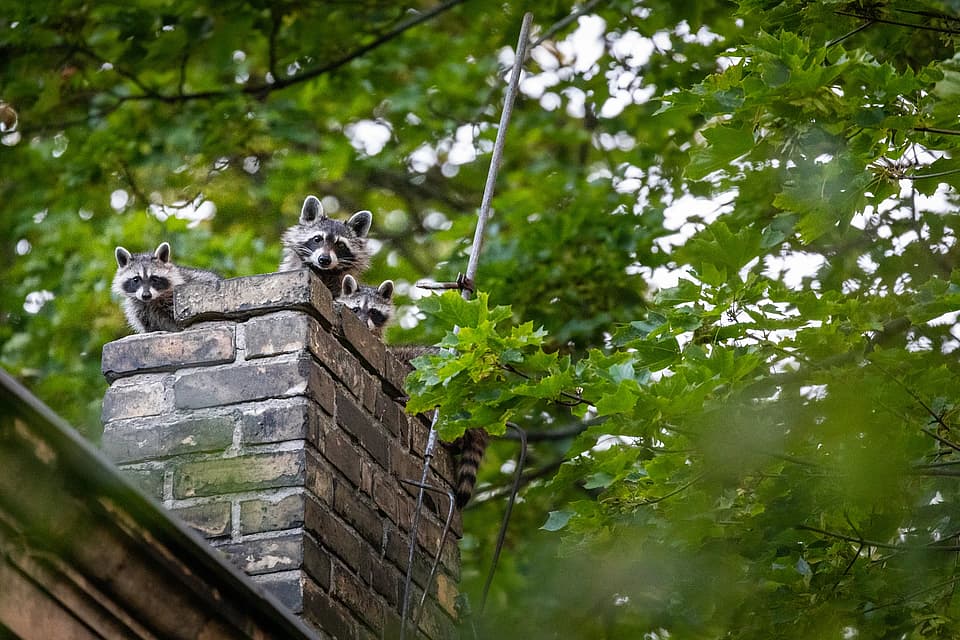
Chimney odors can signal problems. Learn what they mean and how to fix them.
Discover key signs it's time to call a chimney sweep. Learn how to protect your home from smoke, creosote, odors, and chimney damage.
Contact Our Team
A can of all-purpose sealer might seem like a quick fix, but the wrong product can trap moisture inside your chimney and make freeze-thaw damage worse. Professional waterproofing from Brickliners uses a masonry-specific, vapor-permeable repellent applied after a thorough cleaning and any needed repairs. It's the difference between hiding a problem and preventing one. Give us a call to schedule a visit.
Moisture works its way into a chimney from multiple entry points. Our leaky chimney repair services address one of the most common ones through flashing.